

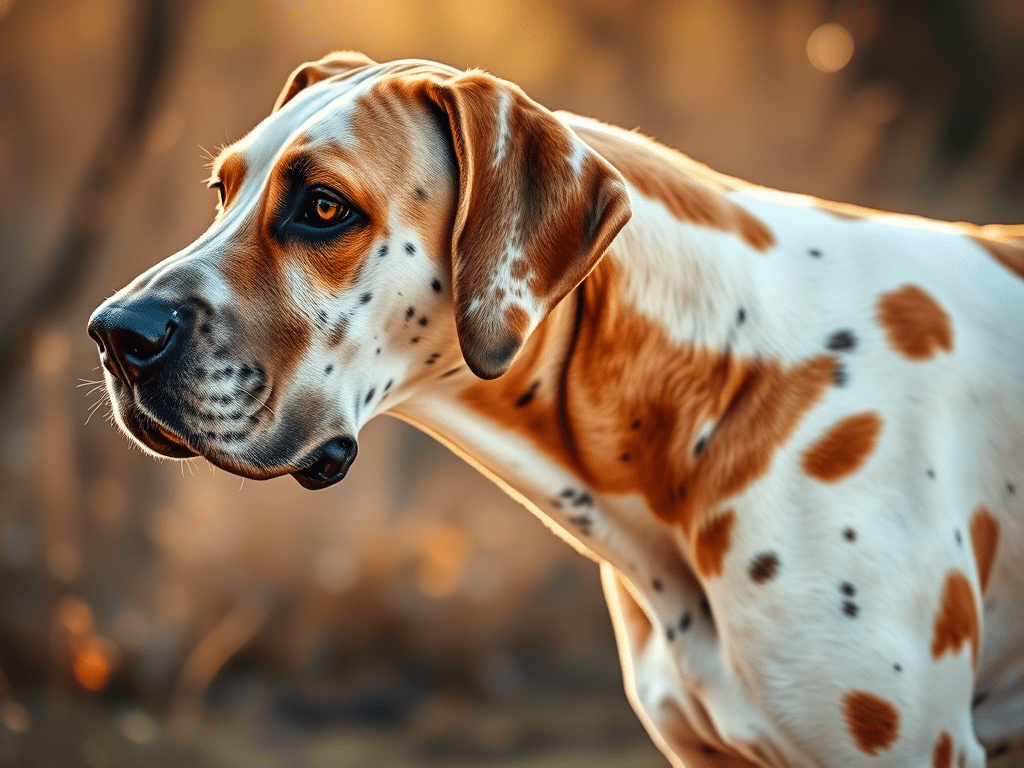
How do Fawnequins get tan patches?
Fawnequins get their tan (sable) patches through a unique interaction between the dog’s underlying fawn coat genetics and the Harlequin modifier gene.
Here is how the genetics work to create these tan patches:
• The Fawn Base (Phaeomelanin): First, the dog must possess the genetic makeup for a fawn coat. This means inheriting the recessive alleles on the K-locus (often K
y
K
y
), which allows the color on the A-locus to be visible. On the A-locus, the dog inherits the sable/fawn alleles (typically A
y
A
y
). This genetic combination produces phaeomelanin, which is the red, yellow, or tan pigment responsible for a standard fawn coat.
• The Unique Effect of Harlequin: For a dog to be a Fawnequin, it must also inherit the Merle and Harlequin genes (typically an HhMm genotype). Most merle modifiers only affect eumelanin (dark pigments like black or blue). However, the Harlequin modifier is highly unique because it also acts upon phaeomelanin (red/tan pigment).
• Creating the Patches: Because the Harlequin gene affects this red pigment, it acts upon the entire sable coat, turning the dog’s background color completely white. The tan patches that remain are in the exact same spots where a standard black-based merle dog would have had black patches.
Additionally, a Fawnequin will usually have some black patches interspersed among the tan ones, which appear exactly where normal black merling would have shown.