

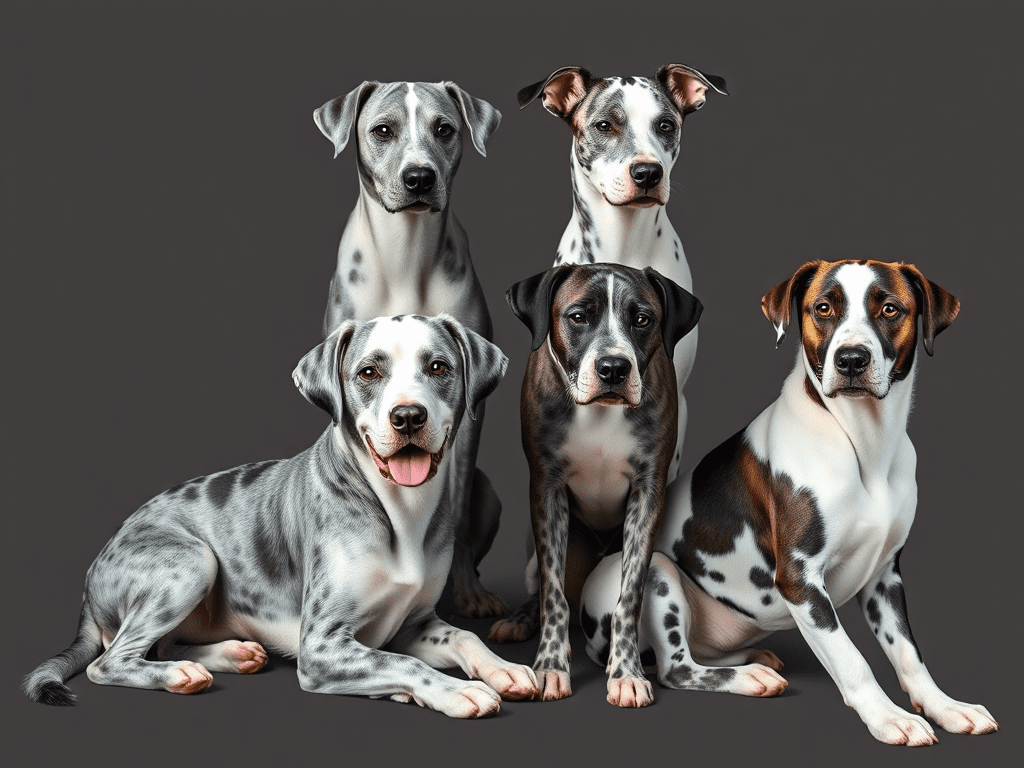
How do different insertion lengths affect a merle’s appearance?
The appearance of a merle dog is directly determined by the length of an extra piece of genetic material (measured in base pairs) inserted into the SILV pigment gene. This genetic insertion creates a defective matrix within pigment cells, allowing pigment granules to escape and fade the coat color.
Depending on the exact length of this insertion, the dog will display one of several distinct visual variations of the merle pattern:
• Cryptic Merles (25 to 44 base pairs): Dogs with this short insertion length display no obvious visual signs of the merle pattern. They may appear completely solid in color or exhibit very few spots.
• Dilute Merles (66 to 74 base pairs): This length produces a uniformly dilute coat in areas that would normally be dark. Unlike typical merles, these dogs do not have the expected splotching.
• Normal or Classic Merles (78 to 86 base pairs): This typical insertion length produces the classic mosaic pattern of normal and diluted areas most commonly associated with merle Great Danes.
• Harlequin Merles (81 to 105 base pairs): Dogs with this longest insertion length display large areas of white along with patches of fully pigmented coat. While most harlequin Great Danes get their pattern from a combination of the normal merle gene and the separate Harlequin (H) modifier, research has shown that some actually achieve the harlequin pattern solely through this specific harlequin merle mutation.
Additionally, some breeders refer to an “atypical length,” which results in a medium amount of spots, falling somewhere between a cryptic and classic merle presentation