


How can I tell if my dogs are playing or fighting? Signs of Normal Play. It can sometimes be difficult to tell if dogs are playing or fighting, as normal play can be loud and look out of control. However, there are several key indicators of healthy play: • Willing Participants: Both dogs should want […]

Understanding Dog Calming Signals Around Children
Do dogs use specific calming signals for human children? Dogs do not use a separate or specific set of calming signals exclusively for human children. Instead, they use their universal canine calming signals—the exact same cues they use with other dogs and adult humans—to communicate discomfort, diffuse tension, and indicate that they mean no harm. […]

Submissive vs Aggressive Dog Grins Explained
How can I accurately identify a submissive grin vs aggression? Although both expressions involve a dog baring its front teeth—which can look terrifying if you are unfamiliar with the expression—they communicate completely opposite intentions. To accurately identify the difference, you must look at the specific shape of the mouth and, most importantly, the dog’s overall […]

Understanding Whale Eye and Hard Stare in Dogs
What specifically do ‘whale eye’ and ‘hard stare’ communicate? Whale Eye A “whale eye” occurs when a dog turns its head slightly but keeps its eyes fixed on a target, causing the whites of their eyes (the sclera) to become visible. • Meaning: This expression is a strong indicator of anxiety, stress, or fear. • […]

Signs Your Dog is Submissive: Understanding Body Language
How can I tell if my dog is feeling submissive? Based on the provided sources, a dog showing submission uses its body language to convey “I mean no harm” or “I give up”. Because dogs use a combination of signals, you should look at their whole body to tell if they are feeling submissive. Here […]
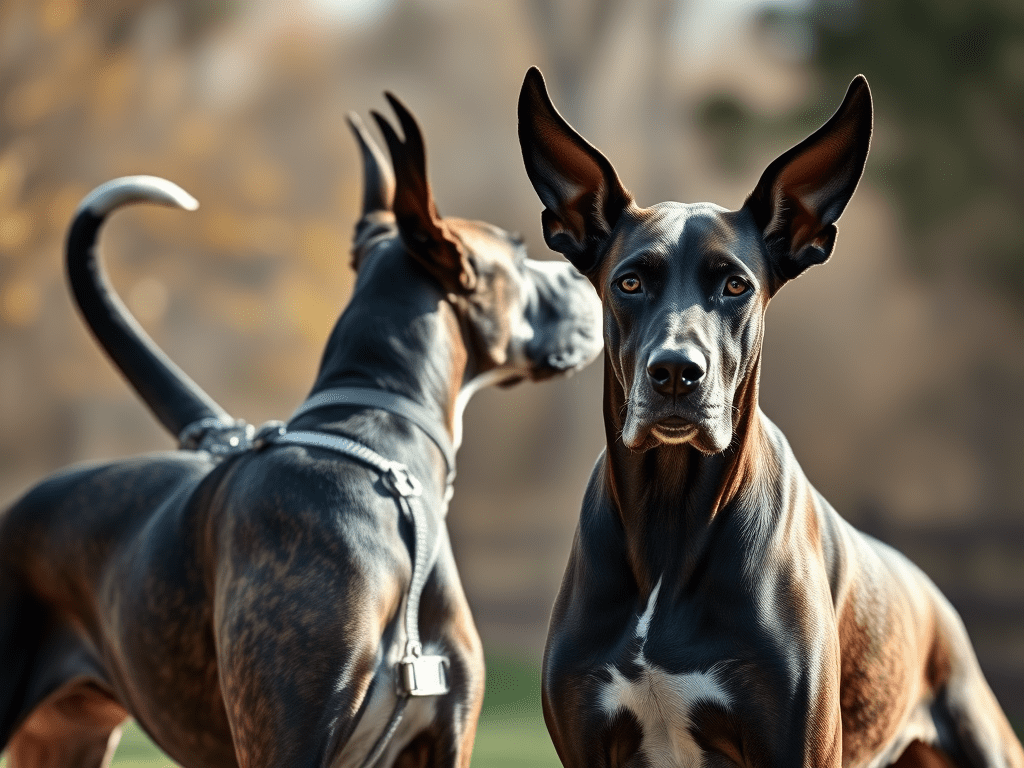
Dog Body Language: Tail and Ear Signals Explained
Tail Positions and Movements A dog’s tail can be a strong indicator of aggressive intentions when you look at its height and the stiffness of the wag: • Height: A tail held very high—often described as pointing up “like a flag”—signals high confidence, assertiveness, or potential aggression. • Stiff Wagging: While people often associate wagging […]

Common Dog Signal Misinterpretations by Children
What are the common mistakes children make when reading dog signals? Children frequently misinterpret or entirely miss the subtle body language cues dogs use to communicate stress and boundaries. Because of these misinterpretations, children are unfortunately the most frequent victims of dog bites, which often occur on the facial area. The most common mistakes children […]

The Psychology Behind Dogs’ Tail Wags: Left vs Right
What do left vs right-biased tail wags mean? Based on the sources, a dog’s tail wagging direction—specifically when viewed from the rear—is linked to how their brain processes different emotional stimuli and conveys distinct feelings: • Right-Biased Wagging: When a tail wags more to the right side of the dog’s body, it indicates positive feelings […]

Effective Ways to Calm a Stressed Dog
How can I help calm a stressed dog? Here are several effective ways to help calm a stressed dog, based on the sources: • Remove them from the trigger: The quickest way to reduce stress is to take your dog away from whatever is causing it. If you are indoors, you can create a safe, […]

Understanding Dog Anxiety: Common Triggers and Solutions
Loud noises and new environments: Sounds like fireworks or visiting new, busy public places are common triggers for anxiety. Changes in routine: Alterations to a dog’s daily schedule, such as a reduction in their usual physical exercise, can easily cause stress. Separation anxiety: Being left alone, especially when an owner returns to work after extended […]